We started this company because healthcare was backwards.
Software was supposed to help people do their jobs. Instead, everyone was working for the software - solving vendor problems, babysitting integrations, and spending more time on workarounds than on the work that actually mattered.
Sketched on a napkin over lunch.
Digital2DNA was born out of frustration.
We were working inside healthcare organizations, and the job had stopped being about treating patients. It had become about solving vendor problems. The software didn't do what the business needed. Integrations were expensive, slow, and fragile. Every meeting was another conversation about workarounds instead of outcomes.
One afternoon, after walking out of one too many meetings where the answer to a straightforward need was “that'll be expensive and take a year,” we sat down at lunch and said: we can do this better.
We sketched out the concept for the company on a napkin. The idea was simple - build a company around two things: a delivery process stripped down to only what matters for execution and quality, and an integration capability that doesn't just connect systems but makes them work together at scale.
More than a decade later, that's still what drives us. Software should be the thing that makes your business work - not the thing your business works around.
How we think about the work.
Ship working software every week. Progress is measured by what you can see and touch in your environment. Working software, demonstrated weekly, in your world.
Earn trust through execution. We don't ask clients to trust us upfront. We ask them to watch what we deliver. Trust builds from evidence, not promises.
Take on what others won't. Complex integrations, failing projects, messy data, hostile legacy systems. Where other firms see risk, we see the work we were built for.
Invest in the product owner. The quality of the product owner is one of the strongest predictors of whether a project succeeds. We coach clients into the role. We don't just expect competence - we help build it.
Keep teams small and accountable. We'd rather stand up a second team than bloat one past the point where communication quality suffers.
How we use AI.
We've been applying AI to real problems since 2020. Not as a buzzword. As a tool.
2020: Classical machine learning. We deployed ML models against healthcare lab data and increased processing throughput by over 300%. The lesson: AI is only as good as the data underneath it. Get the data right first.
2022: AI-powered product. We launched DocSimplify with AI as a core architectural component, using it to deliver complex features and intuitive interfaces for healthcare professionals. As AI models have improved, so has the product.
2025: AI-augmented development. We started embedding AI into how our engineering pairs work, complementing human expertise with tools that accelerate coding, testing, and review. We're building bots that enforce our architectural standards on every check-in.
2025: Autonomous agents. We introduced a synthetic employee into our team. It has its own accounts, its own tasks, and it works alongside real people. The experiment taught us where autonomous agents excel, where they need guardrails, and how to build those guardrails into production systems.
AI isn't a service line for us. It's how we operate.
The people behind the work.
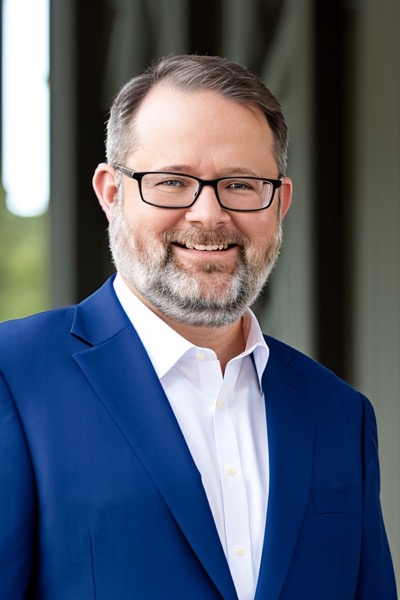
Michael Martin
Founder & Chief Product Officer
Michael Martin has spent more than 20 years at the intersection of technology, healthcare, and product delivery - solving the same problem over and over: organizations stuck between where they are and where they need to be, with a technology gap in the middle.
He founded Digital2DNA out of genuine frustration with the state of healthcare technology. Too many integrations were custom, fragile, and impossible to scale. Too many talented clinicians were being forced to adapt to software that wasn't designed for how they actually worked. Michael set out to change that - building a company focused on integrations that truly scale, products that work the way real people need them to, and a delivery model that ships working software to production every single week.
As Chief Product Officer, Michael owns product vision, delivery methodology, and go-to-market execution across Digital2DNA's services and products. He leads strategic engagements with healthcare CIOs, COOs, and VPs - translating complex business problems into executable delivery plans with measurable outcomes. His team operates in focused Pods of paired engineers with dedicated delivery leads, giving clients full ownership of priorities while Digital2DNA owns architecture, quality, and execution.
One of his proudest achievements is DocSimplify, a FHIR-native platform that lets healthcare organizations build expert systems, configure integrations, and deploy clinical workflows through conversation with AI. What used to take weeks of manual system configuration now happens in minutes. It's proof that the right team with the right process can collapse timelines without cutting corners.
Before founding Digital2DNA, Michael served as CIO of Smart Data, where he more than doubled revenue, forged partnerships with Snowflake and Google, built the company's AI and machine learning practice, and was named CIO of the Year by the Cincinnati Business Courier in 2019. Prior to that, he spent over a decade at CareSource Management Group leading clinical technology teams, building Agile practices from the ground up, and creating one of the first mental health provider-focused health data exchanges.
Michael holds an AI strategy certification from MIT Sloan School of Management among 12+ professional certifications spanning agile delivery, product management, and technical leadership. He is a lifetime member of the Experimental Aircraft Association and is based in Bellbrook, Ohio.

Johan Botha
Founder & Chief Technology Officer
Johan Botha is the technical foundation Digital2DNA is built on. With more than 25 years of experience in software architecture, systems integration, and large-scale application development, Johan is the kind of engineer who makes complex systems work together. Reliably, at scale, and in environments where failure isn't an option.
Before co-founding Digital2DNA, Johan spent nearly seven years at a major managed care organization, where he rose from Technology Architect to Manager of DevOps Innovation, building the integration infrastructure that connected clinical and operational systems across the enterprise. Prior to that, he spent over a decade designing and building SaaS platforms, enterprise service buses, and scalable commercial applications across global manufacturing, healthcare, and enterprise software.
At Digital2DNA, Johan sets the technical direction and integration architecture that the company's delivery teams build on. He's built the patterns, frameworks, and reusable integration approaches that allow Digital2DNA's Pods to move fast without sacrificing quality. Modern APIs, legacy databases, proprietary interfaces, file-based transfers, and everything in between. The integrations his team delivers don't just work once. They scale to billions of transactions.
Johan holds a Master's degree in Computer Science from the University of Johannesburg, where his research focused on motion analysis and object tracking. He brings a rare combination of deep architectural thinking and hands-on implementation. Equally comfortable defining a long-term technical strategy and writing the code that makes it real.
Based in Miamisburg, Ohio.
Johan is a big-scale thinker with a great technical mind. He provides a great balance: how do we make something work tomorrow versus what's the impact going to be 10 years from now.
Small teams. Experienced engineers. Real accountability.
Digital2DNA is not a company that sells headcount and hopes for the best. Our delivery teams are built from experienced engineers who own the full stack. They architect, build, test, automate, deploy, and take responsibility for quality. We staff the right people for your project, and we own that decision.
We work in pairs. Every piece of code has two brains on it. That's not a luxury - it's how we maintain quality at speed and make sure no single person is a bottleneck.
Our teams are small by design. When you need more throughput, we stand up a second Pod instead of stretching one team past the point where communication and quality suffer.
You have been a disproportionately results-oriented organization. People who really care about actually making things work. You're really good at cutting through the noise.
Want to know if we're the right fit?
We're straightforward about what we do well and what we don't. If your project isn't right for us, we'll tell you. If it is, we'll show you what the first month looks like.